
- Trading
- Markets
- Platforms & ToolsPlatforms
- Learn
- About
Why You Should Use a Demo Trading Account Before Trading with Real Money
Established 2006
9M Users
Multiple Markets

Demo accounts make learning trading practical and accessible.
Explore platform tools through realistic, hands-on practice.
Test strategies while building strong trading habits.
Gain confidence by experiencing real market movements.
Start live trading gradually when your process feels consistent.
Many new traders want to place their first trade as soon as they open an account. While enthusiasm helps, trading successfully requires more than market knowledge.
You also need to understand how trading platforms work, develop a consistent strategy, and practise good risk management.
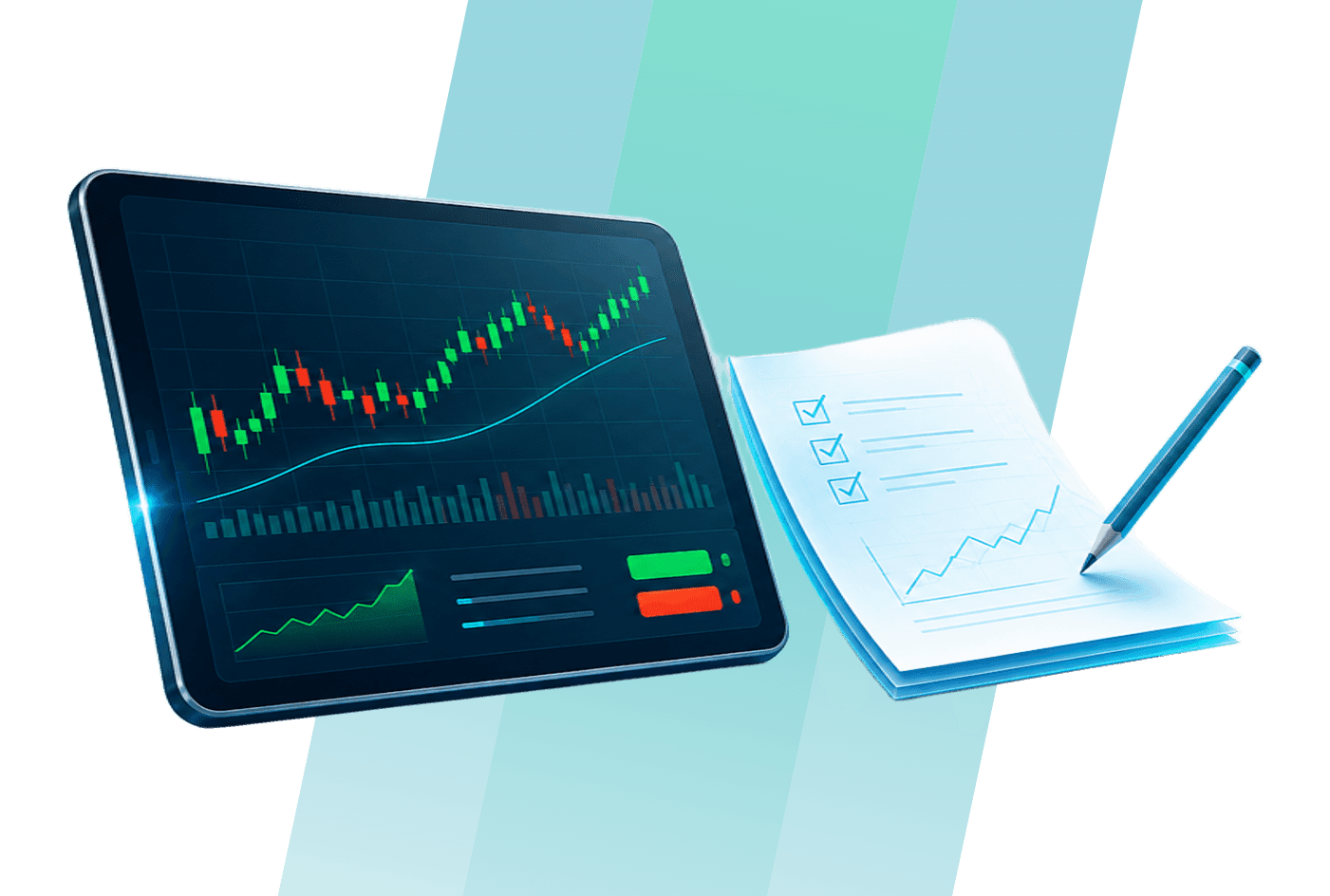
A demo trading account lets you build these skills using virtual funds in realistic market conditions.
You can explore markets, test strategies, and become familiar with trading tools without risking your own capital.
Although trade outcomes are simulated, prices and platform features closely reflect a live trading environment.
Whether you're new to trading or changing platforms, demo trading provides a practical way to learn before committing real money.
Open a free demo trading account and start practising with virtual funds.
A demo trading account (also called a paper trading account) is a simulated trading environment that lets you practise with virtual funds instead of real money.
It mirrors a live trading account, giving you access to the same platform, trading tools, and market data.
With an AvaTrade demo account, you can trade forex, stocks, indices, commodities, and cryptocurrency CFDs while learning how the platform works.
Market prices are based on live or near-live data, so your trades generate simulated profits and losses as prices change.
Demo accounts aren't only for beginners. Experienced traders also use them to test new strategies, explore platform updates, or evaluate a new broker.
Although demo trading closely reflects live markets, it cannot fully replicate the emotions involved in risking real money.
Developing discipline and sound risk management remains essential when moving to live trading.
Practise your skills with a demo account before moving to live markets.
One of the biggest advantages of a demo account is learning your trading platform before risking real money. Even a good trading idea can fail if you enter an order incorrectly or manage a position poorly.
A demo account gives you access to the same interface and features as a live account, allowing you to practise without financial pressure.
Different market conditions require different order types. Use your demo account to practise:
Learning how each order behaves in different market conditions helps you execute your trading plan more effectively
Charts are central to market analysis. A demo account lets you explore chart types, timeframes, technical indicators, and drawing tools while observing price movements over time.
As you gain experience, you'll analyse markets more efficiently and identify potential trading opportunities with greater confidence.
Watchlists help you organise the markets you follow most closely, making it easier to monitor price movements and build a consistent trading routine.
Use your demo account to learn how to:
Knowing where to find this information makes trading more efficient once you move to a live account.
Markets can move quickly. If you're still learning the platform while trading real money, hesitation or mistakes may affect your results.
Practising first allows platform navigation to become second nature, so you can focus on analysing markets and following your trading plan.
Every trader needs a strategy that defines when to enter and exit trades, and how much risk to take. A demo account lets you develop and refine that strategy without risking real capital.
Testing ideas in realistic market conditions helps you identify what works, improve weak areas, and build a trading approach that suits your goals and risk tolerance.
No single strategy suits everyone. A demo account lets you explore different approaches, including:
Testing multiple styles helps you find one that matches your personality, schedule, and objectives.
Explore our trading strategy guides to learn more.
Technical indicators can support market analysis when used correctly. Experiment with tools such as moving averages, RSI, and Bollinger Bands to understand how they perform in different market conditions.
Rather than using many indicators, focus on learning which ones genuinely improve your decision-making.
Consistency matters more than instinct. Create a simple trading plan that defines:
Following predefined rules reduces emotional decision-making and creates habits you can carry into live trading.
Judge your strategy over many trades, not individual wins or losses. Reviewing long-term performance provides a more reliable measure of whether your approach is working.
Keeping a trading journal can help identify recurring strengths, weaknesses, and opportunities for improvement.
One of the greatest benefits of demo trading is the freedom to improve your strategy without financial consequences.
Adjust your entry rules, trade management, or risk controls until you're confident in your process.
Use your demo account to test and refine your strategy before trading with real money.
Reading about financial markets is valuable, but practical experience helps you understand how they behave.
A demo account uses live market prices, allowing you to observe real market movements and apply what you've learned without risking capital.
Over time, you'll become more familiar with the factors that influence price movements and improve your market awareness.
Take a closer look at our copy trading platforms selection to learn more about their features.
Markets don't move in straight lines. They may trend upwards, trend downwards, or move sideways for extended periods.
Demo trading helps you identify:
Watching these patterns develop in real time provides valuable experience that historical charts alone cannot.
Volatility refers to how quickly and sharply prices move. Different market conditions can affect:
You'll also discover that different strategies perform better under different levels of volatility.
Global markets operate across Asian, European, and North American trading sessions, each with different levels of activity and liquidity.
Practising during different sessions helps you understand:
This knowledge can help you decide when your strategy is most effective.
Major announcements such as interest rate decisions, inflation data, and employment reports often trigger increased market volatility.
A demo account lets you observe how markets react without exposing your capital to additional risk.
Over time, you'll gain a better understanding of how economic events influence different asset classes.
Spreads are not always constant. During periods of high volatility or lower liquidity, they may widen.
Seeing this in a demo environment helps you understand how trading costs change under different market conditions and prepares you for live trading.
Every trading session offers an opportunity to learn. The more market conditions you experience, the better prepared you'll be to make informed decisions when trading real money.
Use a demo account to build experience before trading live.
Finding trading opportunities is only part of successful trading. Managing risk is equally important, as even profitable strategies can perform poorly without proper risk control.
A paper trading account provides a safe environment to build disciplined risk management habits before real money is involved.
Position sizing determines how much capital you commit to a trade.
During demo trading, practise adjusting position size according to:
This helps you understand how position size affects both potential profits and losses.
A stop-loss order automatically closes a position if the market reaches a predetermined price, helping to limit downside.
Practise placing stop-loss orders based on market analysis and your trading strategy rather than emotion.
Equally important is learning not to move your stop-loss simply to avoid accepting a losing trade.
Before entering any position, decide how much you're prepared to lose if the trade fails.
Consistently applying the same level of risk helps protect your capital during losing periods and makes your results easier to evaluate over time.
Every trader experiences losing streaks. These temporary declines in account value are known as drawdowns.
Experiencing drawdowns in a demo account helps you:
Successful traders don't focus only on making profits—they also protect their capital.
Treat your virtual funds with the same discipline you would apply to real money. Developing this mindset early can make the transition to live trading much smoother.
Build disciplined risk management before you trade with real capital.
Confidence should come from preparation and experience, not from a few profitable trades.
A demo account allows you to gradually build confidence as you become more comfortable with your platform, strategy, and decision-making process.
Successful traders rely on repeatable routines rather than impulse.
Use your demo account to practise:
These habits encourage more disciplined decision-making.
Regular practice helps routine tasks become second nature, including:
This reduces operational errors and allows you to focus on market analysis.
Every new trader experiences uncertainty. Hands-on experience helps answer practical questions through repetition, making similar situations easier to handle in the future.
A successful demo account doesn't guarantee the same results in live trading. Real money introduces emotions that simulation cannot fully replicate.
Healthy confidence comes from:
Approaching markets with discipline and realistic expectations provides a stronger foundation for long-term development.
Use a demo account to build confidence through preparation and practice.
A demo account helps you build skills and confidence, but moving to live trading should be based on preparation rather than the desire for quick profits.
Before funding your account, make sure you can confidently place and manage trades, analyse charts, and use the platform's key features.
Avoid changing strategies after every result. Test one approach over a meaningful number of trades so you can evaluate its consistency.
Before trading live, make sure you consistently:
Begin with modest position sizes to reduce the emotional pressure of trading with real money. Your goal should be to apply your trading process consistently rather than maximise profits immediately.
Measure your progress by asking:
Consistency matters more than short-term returns.
As your confidence and experience grow, you can gradually increase your position size while continuing to manage risk responsibly.
Start with a free demo account. When you're consistently following your trading plan and feel confident using the platform, transition to live trading at your own pace.
Demo trading helps you practise platform tools, strategies, and risk management before transitioning to live markets.
There is no fixed timeframe. Continue until you can use the platform confidently, follow a strategy consistently, and manage risk with discipline.
It can help you learn the basics, practise strategies, and understand market behaviour. However, it cannot fully replicate the emotions involved in trading real money.
Available markets vary by broker, but may include forex, stocks, indices, commodities, cryptocurrencies, and CFDs.
Experienced traders can use demo accounts to test strategies, explore indicators, evaluate brokers, and learn about platform updates.
Consider moving when you understand the platform, follow one strategy consistently, and apply sound risk management. Start small and focus on discipline rather than immediate profits.